Are Fruit Baskets Worth It? What Arrives and What Spoils
- Are fruit baskets worth it?
- What actually arrives in a fruit gift basket?
- How do freshness and ripeness survive delivery?
- What should a good seller do about seasonality and substitutions?
- Which occasions does a fruit basket genuinely suit?
- Who should not receive a fruit basket?
- Is a fruit basket better than a shelf-stable basket for the same money?
- What should you ask before ordering a fruit basket?
- Sources
Are fruit baskets worth it?
A fruit basket is worth it when the fruit is whole, in season, and headed to a household that will eat it within a week. It is a poor buy when it arrives at an empty house, lands with a single eater, or goes to someone whose medication or diet rules out half of what is inside. When you cannot confirm delivery timing or appetite, a shelf-stable basket for the same money is the safer choice.
A fruit basket (fresh fruit arranged in a container, sometimes padded with nuts or sweets) keeps ripening after it leaves the packer. That is its charm, and the whole of its risk.
What actually arrives in a fruit gift basket?
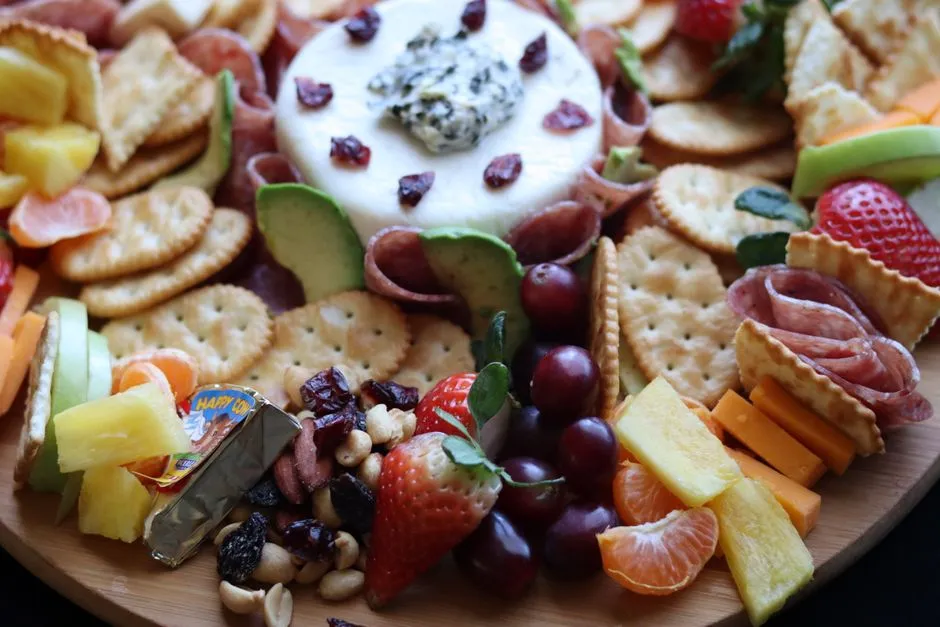
Less of a fixed list than the photo suggests. One produce seller's organic basket listing, for example, says that "based on availability" it may include apples, pink grapefruit, pears, oranges and mangos, and notes that Arizona, Florida, Georgia, Louisiana and Texas prohibit citrus shipments, so orders to those states receive "another seasonal fruit" in place of the citrus (Melissa's). Treat the photo as a representative example, not a packing slip.
Two quite different products also share the name. Whole-fruit baskets carry apples, pears, oranges and their cousins, and are relatively forgiving. Cut-fruit arrangements, where fruit is sliced and skewered into a bouquet shape, are a perishable food. The CDC's produce safety handout says to refrigerate cut, peeled, or cooked fruits and vegetables "as soon as possible, or within 2 hours," and to keep the refrigerator at 40°F or below (CDC). Schedule a cut-fruit arrangement only for a time when someone will be there to put it straight into the refrigerator.
How do freshness and ripeness survive delivery?
Some fruit keeps ripening after it is picked and some does not. Produce that continues to make ethylene, a natural ripening gas, after harvest is called climacteric; University of Texas at Austin's College of Natural Sciences gives bananas, apples and peaches as examples, and names grapes and blueberries among the non-climacteric kind (UT Austin). The same article warns that "storing climacteric produce in closed containers or bags can shorten shelf life," because the bag makes it hard for the gas to escape. A basket sealed in cellophane is, functionally, a bag, so unwrap it on arrival.
Ripening also explains the famous rock-hard pear. Pears are picked mature but unripe and finish ripening after harvest. The USA Pear Bureau notes that "pears will not ripen properly inside the fridge," and that ripeness is checked by pressing gently near the stem, where a ripe pear gives slightly (USA Pears). A firm pear in a gift box is often intended; a careful seller includes a card saying so.
Once the box is open, the clock varies by fruit. Texas A&M AgriLife Extension's storage table gives bananas 2 to 3 days at room temperature, berries 2 to 3 days in the refrigerator crisper, grapes 3 to 5 days refrigerated, and oranges 2 weeks at cool room temperature; apples keep up to 1 month in the crisper once ripe, while nectarines, peaches and pears should ripen at room temperature and then keep 5 days in the crisper (Texas A&M AgriLife Extension). A basket built on oranges and apples forgives a slow week. One built on berries and bananas does not. For how fruit compares with everything else that goes into a basket, see how long gift baskets last.
What should a good seller do about seasonality and substitutions?
Good fruit sellers are open about seasons. Signs to look for:
- It names the fruit, or names its rules. The listing gives specific varieties, or explains what happens when something is out of season or cannot ship to the delivery state, as the citrus note above does.
- It says what a substitution will be. A vague promise of comparable value tells you little; better is what replaces what, and whether you will be told before it ships.
- It ships fast and tells you how. Clemson Cooperative Extension's guidance on mailing perishable food advises buyers to "Ask the company how the food will be mailed," and says perishable items should be delivered "as quickly as possible, ideally overnight" (Clemson HGIC).
- It includes care instructions. A ripening note for pears, a reminder to unwrap, and refrigeration instructions for anything cut.
Which occasions does a fruit basket genuinely suit?
Fruit is at its best when it lands in a full house. Common convention favours it in three situations:
- Get-well, at home. For someone recovering at home with family around, whole fruit is light, cheerful and asks nothing of anyone. Hospitals are another matter; check with the unit before sending food of any kind, and our get-well gift basket guide covers options that suit a ward.
- Sympathy, for a household receiving visitors. Whole fruit feeds visitors without anyone cooking. In the first days the kitchen is often already full, so a basket arriving a week or two later may be the one that gets eaten. Sympathy gift etiquette covers what to write and when to send.
- Office thank-yous. A shared basket works for a team that is actually in the building on delivery day. Clemson's guidance says not to have perishable items delivered to an office unless you know they will arrive on a workday, with refrigerator space to keep them cold. More on clients and colleagues is in our corporate gifting guide.
Who should not receive a fruit basket?
- Anyone taking a medication that interacts with grapefruit. The FDA states that "Grapefruit juice and grapefruit can affect the way your medicines work," naming examples such as some cholesterol-lowering statins, blood pressure drugs and organ-transplant rejection drugs, and adds that Seville oranges, pomelos and tangelos might have the same effect (FDA). If you do not know the recipient's medications, choose a basket without those fruits. Whether a particular medicine is affected is a question for the recipient's doctor or pharmacist.
- Someone on an eating plan set by a doctor or dietitian. Fruit is not neutral in every medical diet, so ask first or send something that is not food.
- Anyone who lives alone or travels often. A basket sized for a family becomes a countdown for one person.
- A home where nobody will be in to receive it. Clemson warns that an unannounced perishable gift "may sit unsafely on the front porch or at the post office for hours or even days."
Is a fruit basket better than a shelf-stable basket for the same money?
A fruit basket spends more of your budget on something perishable that has to travel quickly, so speed and careful packing are part of what you are paying for. A shelf-stable basket of nuts, crackers, chocolate or coffee lets the recipient choose when to open it, survives an empty house and keeps for weeks.
Our editorial view: choose fresh fruit when you can confirm the delivery date and a household that will eat it within days. Choose shelf-stable when you cannot confirm either, when the recipient lives alone, or when the occasion falls in a week already crowded with food. A middle path is a mixed basket with a few hard-wearing whole fruits, such as apples and oranges, alongside packaged goods.
What should you ask before ordering a fruit basket?
- What fruit is in it this week, and what replaces anything that is unavailable?
- Is any of it cut, and does it need refrigeration on arrival?
- How is it shipped, how fast, and on which days does it deliver?
- Does it come with ripening and storage instructions?
- Does it contain grapefruit, Seville oranges, pomelos or tangelos, and could the recipient's medication rule them out?
- Will someone be there to receive it, and do they know it is coming?
If a seller answers those plainly, a fruit basket is a generous, bright gift. If it cannot, the honest answer is: not that one.
Sources
- Melissa's: Fresh and Dried Organics Basket listing
- CDC: Steps to Safe and Healthy Fruits and Vegetables (handout)
- University of Texas at Austin, College of Natural Sciences: How to Extend the Shelf Life of Fruits and Vegetables with Science
- USA Pears: Pear FAQ
- Texas A&M AgriLife Extension: Safe Storage of Fresh Fruits and Vegetables (E-200)
- Clemson Cooperative Extension, Home and Garden Information Center: Mailing Perishable Foods
- U.S. Food and Drug Administration: Grapefruit Juice and Some Drugs Don't Mix